
The spooky season is upon us, and with that, it feels especially appropriate to dive into one of the most interesting topics in the world of jewelry.
Throughout history, jewelry has carried a great deal of meaning and symbolism. It has also often carried a spiritual connotation, with various symbols used as protective talismans for the wearer.
The Cornicello
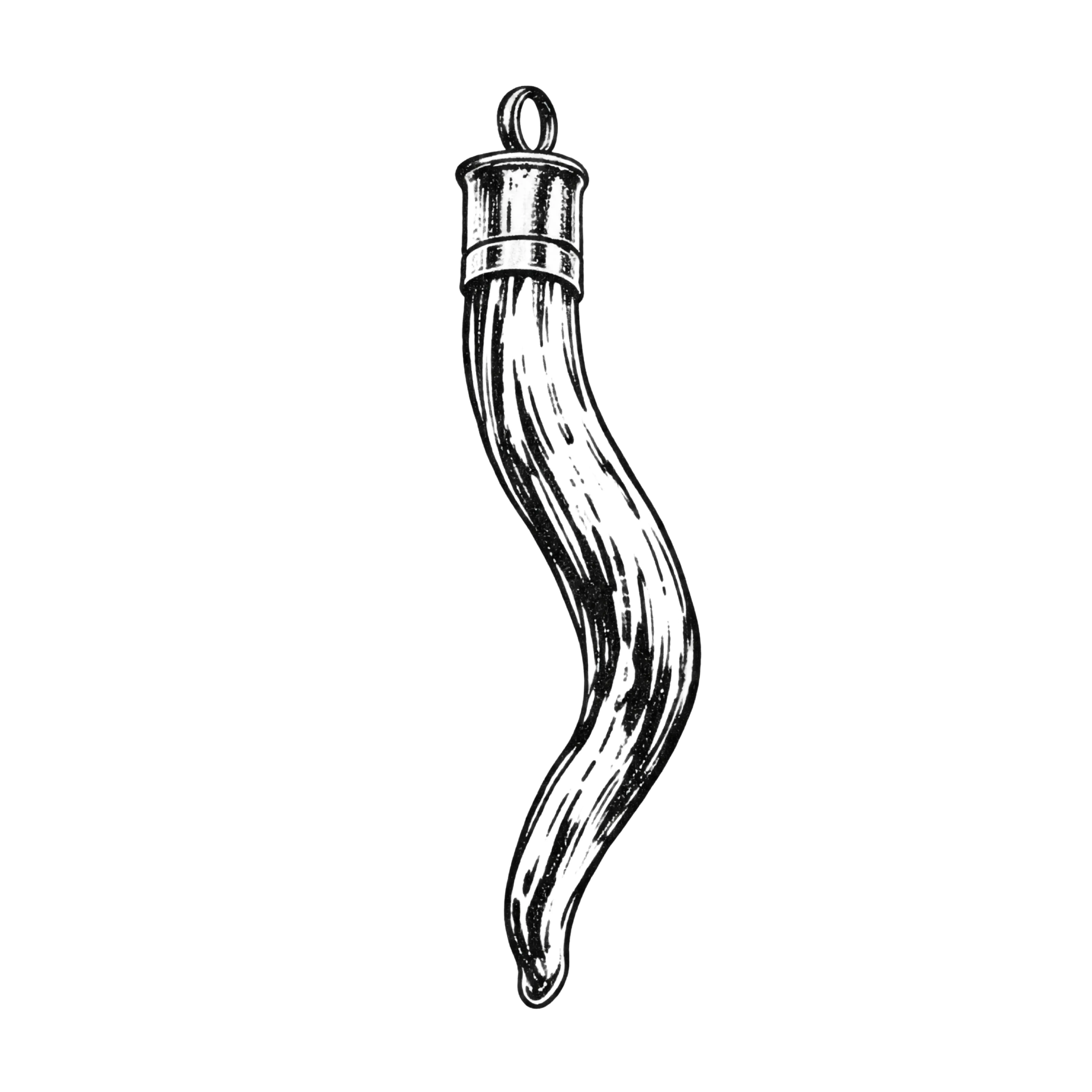
We have recently seen a resurgence in one of these protective charms in particular: the cornicello. Also known as the “Italian horn,” the cornicello has long been used to ward off bad intentions, namely malocchio, or the “evil eye.” The amulet traces back to ancient times, when horns represented protective forces of nature.
A somewhat lesser-known association with this amulet is its link to Greek mythology. The cornucopia became a symbol of nature and fertility after being broken from a goat by Zeus and filled with flowers and fruit. When crafted in red, typically coral, it is said to be sacred to Venus, the goddess of love. When crafted in silver, it is associated with the moon goddess Luna.
If you are considering wearing this symbol as a protective charm, let it be noted that it is said to bring the best luck when received as a gift rather than purchased for oneself.

The Mano Figa
The mano figa is an ancient amulet in the shape of a hand gesture, tracing back to ancient Etruscan and Roman Italy. It depicts a closed fist with the thumb protruding between the pointer and middle fingers.
Originally, this was a symbol of sex between a man and a woman, representing fertility, virility, and feminine power. In some cultures, the mano figa is seen as an offensive gesture, similar to giving the middle finger, while in others, it is used as a protective charm. Interestingly, it is the obscenity of the gesture that lends itself to operating as a protective force, shocking and distracting evil spirits. Often crafted in black materials such as jet, onyx, or obsidian, these charms are believed to absorb and neutralize dark energies, acting as a shield.
An example of how this symbol exists across cultures is its popularity in Brazilian folk magic, where small black figas are commonly placed on young children to ward off jealousy and sudden misfortune.
The Scarab Beetle
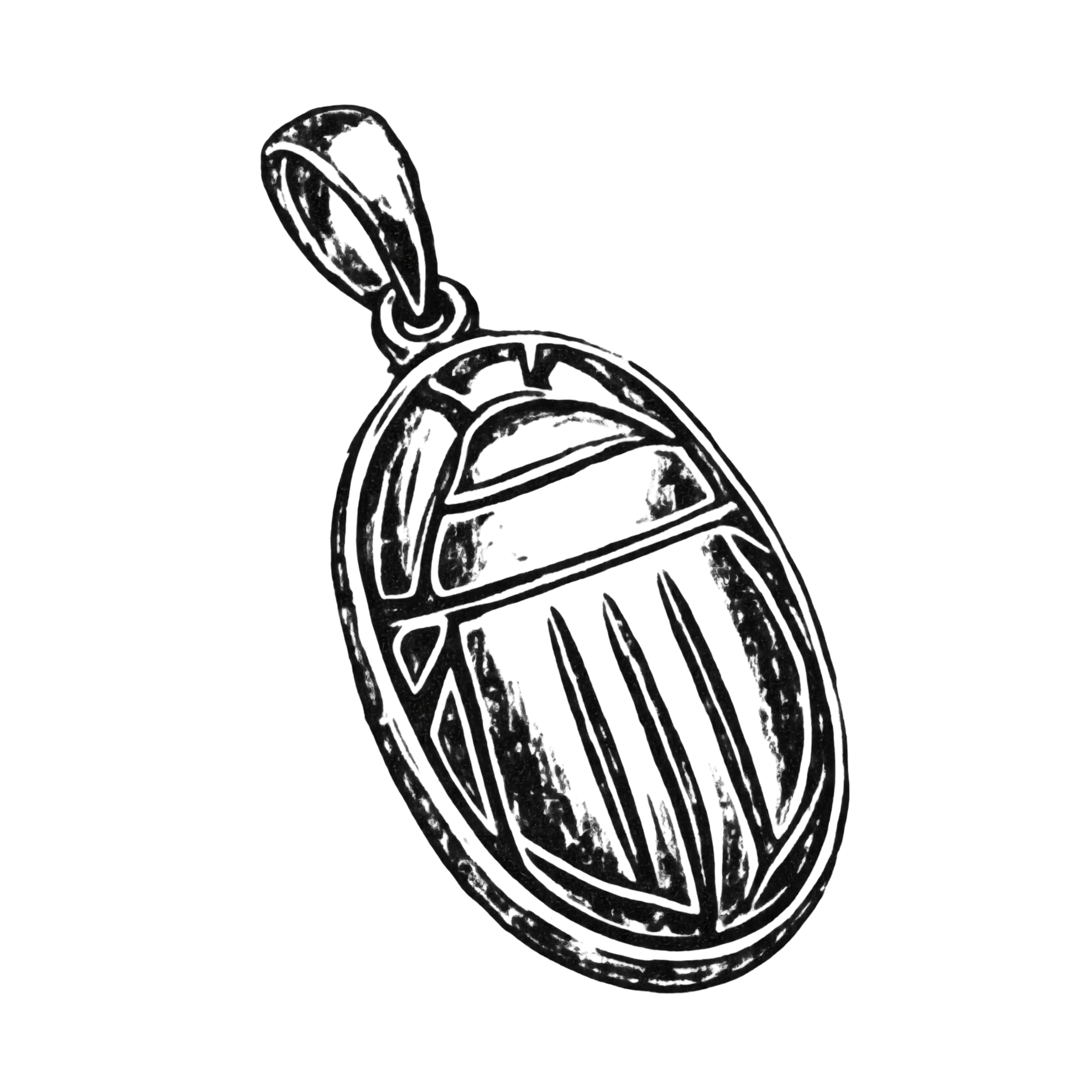
Another very common symbol spanning eras is the scarab beetle. Originating in ancient Egypt, the scarab beetle was associated with the sun god Khepri, a deity linked to the rising sun and rebirth. Scarabs were used as protective talismans and were believed to bring good fortune and strength. During their lifetimes, Egyptians wore scarabs as rings, bracelets, necklaces, and seals. After death, however, scarabs were placed inside mummy wrappings, usually over the heart, as a means of protecting the soul and guiding it through the afterlife.
Egyptian motifs have experienced multiple periods of revival throughout history. The Victorians were very taken with ancient civilizations, thanks in part to the archaeological exploration happening at the time, and drew inspiration from ancient Etruscan and Egyptian designs. The fascination with ancient Egypt carried through the turn of the century, and upon the discovery of King Tutankhamun’s tomb in 1922, scarab beetles experienced yet another resurgence during the Art Deco era. Later, in the 1970s, traveling museum exhibitions featuring discoveries from King Tut’s tomb sparked a new wave of scarab beetle designs in jewelry, particularly bracelets and pendants.
More Than Just Adornment
One of the things we find most fascinating about antique jewelry is the meaning behind the pieces themselves. Beyond the materials, craftsmanship, and design, there is often a deeper history attached to the symbols we wear. With Halloween just around the corner, it seems fitting to revisit these symbols and the beliefs that have surrounded them for centuries. Whether or not you believe in their protective properties, these amulets offer a glimpse into the traditions and superstitions that have shaped jewelry throughout history, and are a wonderful reminder of how much more a piece of jewelry can hold beyond its beauty alone.