The Secret Language of Victorian Jewelry: Part Three | Hope, Luck, and New Beginnings
Beyond love and nature, Victorian jewelry was filled with symbols of hope, protection, and optimism. These motifs reflected the beliefs and emotions of the people who wore them.
Crescent Moons and Stars: New Beginnings and Discoveries
Celestial jewelry became especially fashionable during the Victorian period due to the era’s deep romanticism, the astronomical discoveries being made at the time, and a growing fascination with spiritualism.
The return of Halley’s Comet in 1835 kicked off what became known as “comet mania.” Suddenly, celestial observation became a hobby for Victorians, and these themes were beautifully reflected in Victorian jewelry.
The crescent moon symbolized new beginnings and growth. Slender crescent moons specifically represented the divine feminine and the moon goddess and were commonly gifted to newly married women, earning the nickname “honeymoon brooches.” Brooches such as these were worn and loved by Queen Victoria herself.
Stars were also popularly depicted as symbols of spiritual guidance, protection, and unwavering love.
Moon and star brooches were particularly popular evening accessories, often glittering with diamonds or seed pearls to resemble the night sky.
Many collectors appreciate these motifs today because they feel both romantic and surprisingly modern.
Anchors: Hope and Steadfastness
Anchors were far more than nautical symbols. For Victorians, they represented hope, stability, and unwavering faith.
They were often exchanged between loved ones during long separations, particularly when family members served in the navy or traveled overseas.
Anchor motifs were frequently combined with hearts or crosses to represent the trio of faith, hope, and love. They were also symbols used in mourning jewelry and on headstones, signifying hope for eternal life.
Horseshoes: Luck and Protection
The horseshoe was an extremely popular talisman of good luck and protection, unsurprisingly given the equestrian culture championed by the royal family.
Victorian jewelers often created horseshoe brooches and stick pins set with diamonds, pearls, or colored gems. The open end was either worn facing upward to “hold” good fortune or downward to “pour” luck onto the wearer.
These cheerful designs became popular gifts for weddings, birthdays, and important milestones.
Why Symbolic Jewelry Was So Popular and Why Collectors Today Cherish It
Victorian society placed great importance on etiquette and emotional restraint. Jewelry offered a beautiful way to communicate feelings that were usually left unsaid.
The era was also very much shaped by Queen Victoria herself. Her marriage to Prince Albert popularized romantic jewelry, while her decades of mourning following his death influenced memorial and mourning jewelry throughout Europe.
At the same time, advances in jewelry manufacturing made beautifully crafted pieces more accessible to the growing middle class, allowing sentimental jewelry to become part of everyday life rather than something reserved only for royalty and the aristocracy.
Today, many remarkable examples of Victorian jewelry are discovered through estate jewelry collections, where they continue to be treasured by collectors and admired for their enduring beauty and fascinating history.
Victorian jewelry always has a story to tell. Whether representing everlasting love, hope, new life, or honoring those who have passed on, these pieces carry within them the emotions and meaning of people who lived more than a century before us.
That connection is part of what makes antique jewelry so extraordinary. How magical is it that we have the opportunity to fall in love with these beautiful pieces, crafted to represent such meaningful moments, and connect with people we have never known?


The Secret Language of Victorian Jewelry: Part One | Symbols of Love
If you ask any antique jewelry expert, and likely most historians, they will tell you how powerful symbolism was in the Victorian Era. Jewelry from this time was rarely just decorative; it was often a deeply personal medium for expressing oneself.
During the reign of Queen Victoria (1837–1901), these pieces allowed people to convey their love and loyalty, grief and hope, and many messages that still remain a mystery—all without saying a word. At a time when sentiment was woven into daily life, even a small pendant, ring, or brooch could carry immense meaning.
Today, these antique jewelry pieces continue to captivate collectors for their craftsmanship as well as their rich jewelry history. Victorian jewelry remains one of the most beloved categories of antique jewelry, admired for both its artistry and symbolism.
In this series, we’re going to explore some of the most popular Victorian jewelry motifs, what they symbolized, and why they were so meaningful during this era.
Hearts: The Universal Symbol of Love
While the heart has long represented love and affection, the Victorians found countless and very creative ways to embrace the symbol. Lockets forged in the shape of a heart would often hold within them a miniature portrait, or perhaps a lock of hair, transforming them into cherished keepsakes between spouses, family members, and close friends.
Some of these designs featured an arrow to symbolize Cupid’s love, while others were decorated with flowers, pearls, and various gemstones to give them a more personal touch.
Pieces such as these were frequently exchanged as tokens of courtship or given to family members as treasured heirloom jewelry.
Victorian heart jewelry remains a highly sought-after category for collectors because its message is as timeless and true now as it was well over a century ago.
Snakes: Symbols of Eternal Love and New Beginnings
One of the defining motifs of the Victorian Era was the serpent. The symbol became especially popular after Prince Albert proposed to Queen Victoria in 1839 with a snake antique engagement ring featuring an emerald set within its head.
The royal couple were held as a grand example of true love and romance in marriage and were undoubtedly the trendsetters of their time. Following the untimely death of Prince Albert in 1861, the snake symbol was increasingly incorporated into mourning jewelry, as the Queen spent her remaining years mourning the loss of her beloved husband.
The circular shape of the serpent was representative of eternity, an unbreakable bond, and a love without end—even in death. As snakes are known for shedding their skin, this motif was also embraced as a symbol of transformation and new life.
Snake antique rings, bracelets, and brooches became highly fashionable throughout this era because they represented themes that so many people resonated with, and still do today.
Lockets: Love Carried Close
Although not a motif themselves, lockets deserve special mention because they beautifully capture the sentimentality of Victorian jewelry.
Many held tiny portraits, handwritten notes, dried flowers, or woven locks of hair from loved ones. During the later years of Queen Victoria’s reign, mourning lockets became especially common after Prince Albert’s death, as jewelry increasingly served as a way to remember those who had passed away.
Owning a Victorian locket today is like holding a small piece of someone’s personal history.
The Secret Language of Victorian Jewelry: Part Two | Nature’s Hidden Meanings
Victorians found endless inspiration in the natural world, and many of their favorite jewelry motifs carried carefully chosen meanings. Flowers and birds became a beautiful way to express emotions, beliefs, and personal connections.
Flowers: Meaning Behind Every Bloom
Victorians embraced floriography, the “language of flowers,” and assigned specific meanings to different blossoms.
Some popular examples include:
- Roses represented love and beauty.
- Forget-me-nots symbolized remembrance and enduring affection.
- Lily of the valley stood for purity and the return of happiness.
- Pansies were given as a token to let the wearer know they were always on the giver’s mind.
- Ivy represented fidelity and lasting friendship.
- Oak leaves symbolized strength and endurance.
A carefully chosen floral brooch or pendant could communicate emotions that polite society often left unspoken, making these pieces especially powerful tokens for the Victorians.
Birds: Hope, Freedom, and Devotion
Another deeply symbolic favorite motif of the Victorian Era was the bird, and different species carried different meanings.
Swallows mate for life and thus became a symbol of enduring love, loyalty, and the promise of a safe return home. They were sentimental tokens, especially for those who were separated by travel or military service.
Swans, like swallows, mate for life and were also used to symbolize deep romance, fidelity, and sublime beauty. The late Victorian Era experienced a major revival of mythological storytelling, and contemporary artists integrated the swan into popular depictions of folklore.
Doves symbolized peace, hope, and devotion. In jewelry, they were often paired with an olive branch or perhaps the word “pax,” which is Latin for “peace.”

Owls were saved by the Victorian obsession with ornithology. Once seen across various cultures as a bad omen, and in medieval Europe as companions of witches, these birds came to symbolize wisdom, mystery, and natural beauty. Their striking appearance also made for exquisite depictions in many artistic mediums.
These birds, and a handful of others, were some of the most elegant motifs from the era and appeared in all types of Victorian jewelry.
Continue to Part Three, where we explore celestial symbols, signs of protection, and the motifs that represented hope and new beginnings.

Preserving History Through Jewelry
The story of a Victorian signet ring
A Story Still Attached
One of the questions we get asked most is where our jewelry comes from. Usually, we can trace a piece to a certain era or maker through its hallmarks and craftsmanship, but the people who wore it are often lost to time. Every once in a while, though, a piece comes to us with its story still attached. This Victorian signet ring is one of those rare finds.
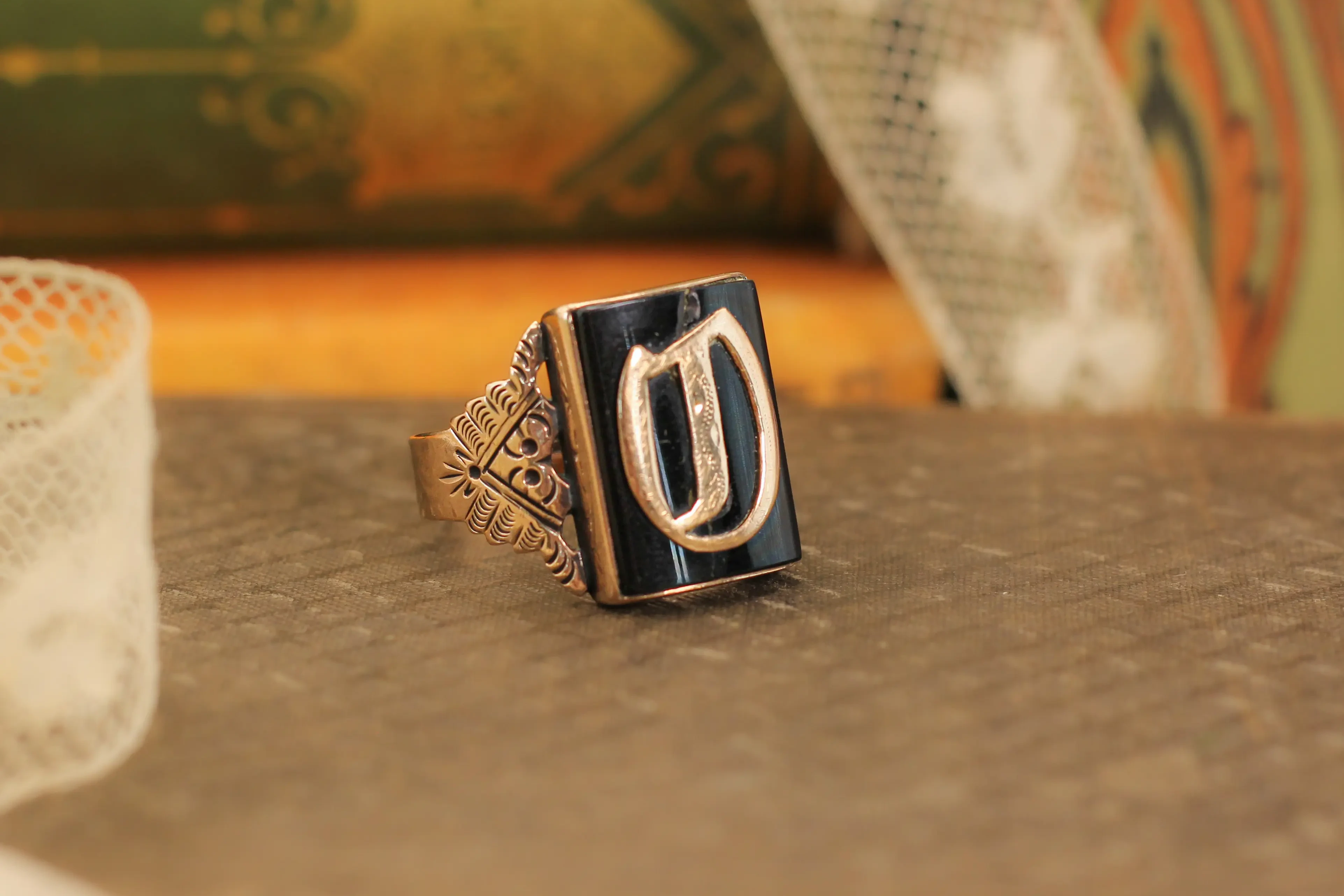
Set with a black onyx tablet encrusted with a golden Old English “O,” the ring is stamped inside with Patent Aug. 26, 1890. When we found it, we connected with the owner and asked if they knew anything about its history. They told us it had belonged to their great-grandfather, Charles “Charlie” Overpack, born in North Hampton, Ohio, in 1871.
The Man Behind the Ring
Charlie and his wife, Cora, owned a grocery store and meat market for decades. When their business burned down in 1930, they rebuilt and kept the community going. His family remembered him as someone who dressed well, appreciated good craftsmanship, and loved finding new uses for old materials.
From then on, I saw it differently. It wasn’t simply an antique ring; it was Charlie’s ring.
An Invention in Gold
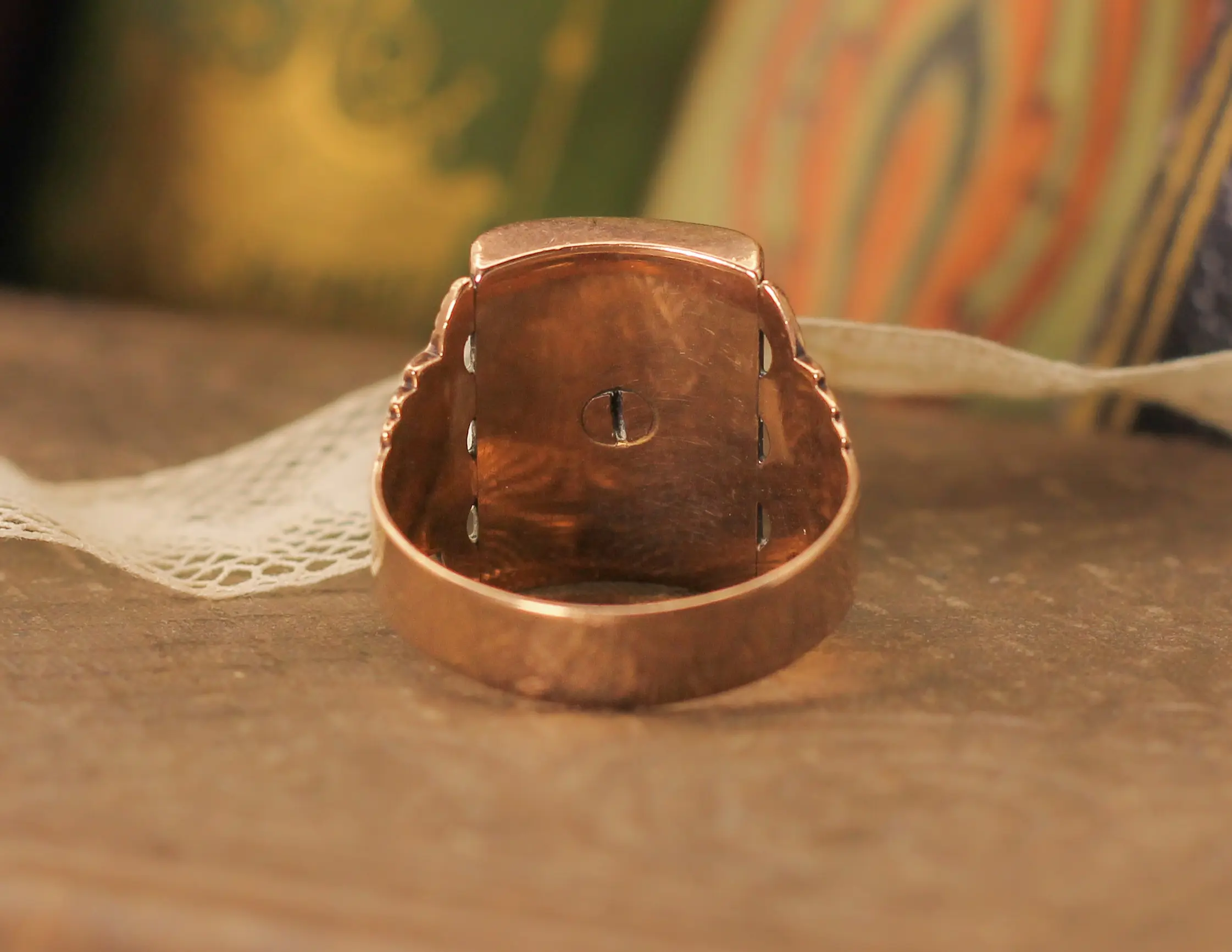
The patent date opened another chapter of its story. It led us to William Leidig of Newark, New Jersey, who patented an interchangeable jewelry system in 1890. His design allowed the face of a signet ring to be removed and replaced without changing the gold mounting.
When we compared the patent drawings to this ring, every detail matched, confirming that it is an original example of Leidig’s invention.

Carrying the Story Forward
Finding a piece with both documented family history and a patented design is incredibly uncommon. At Heirloom Abbey, those are the stories we love most. Jewelry can last for generations, but when it carries the people and history behind it, it becomes much more than something beautiful to wear. It becomes a piece of the past that can continue its story with someone new.

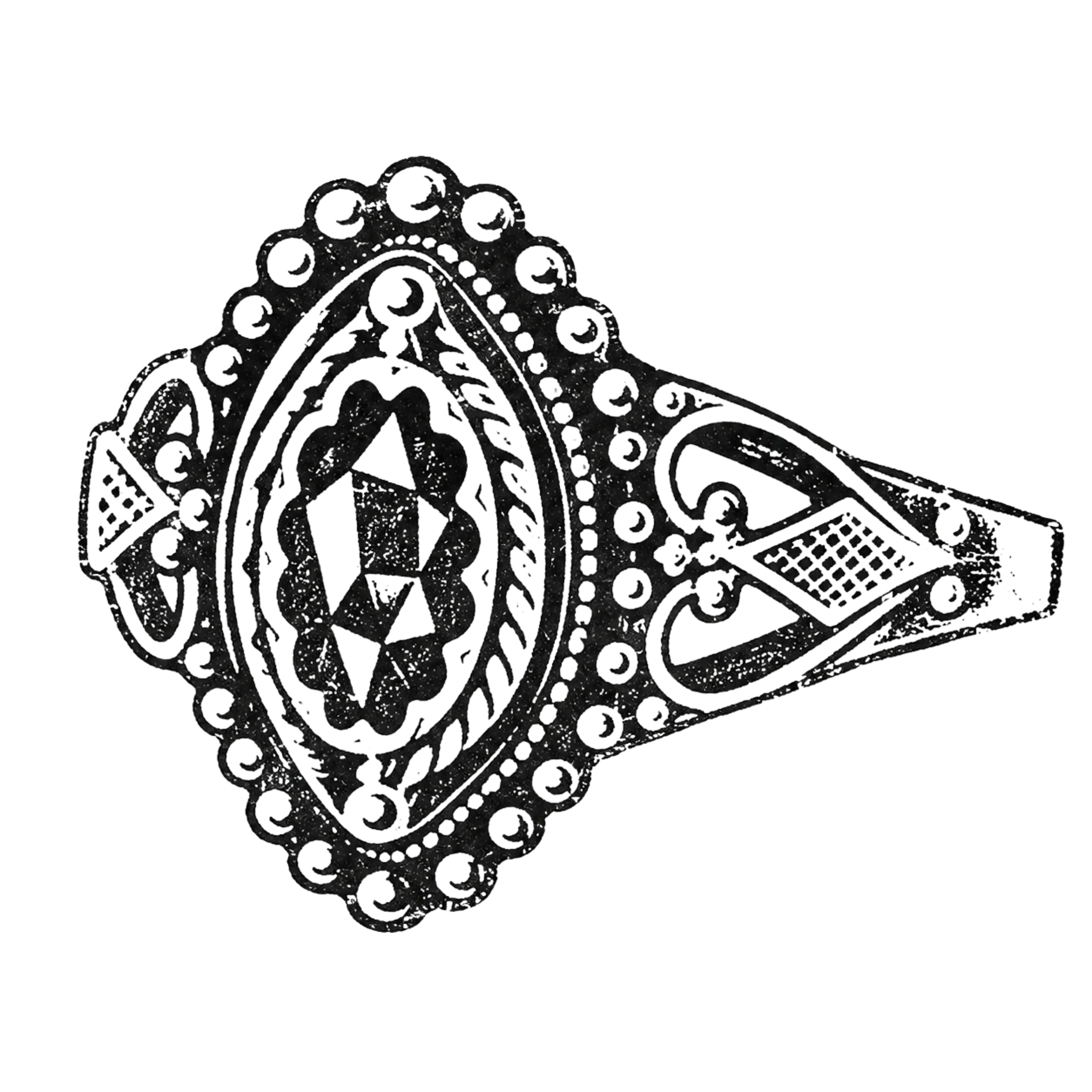
The First Antique Piece I Ever Bought
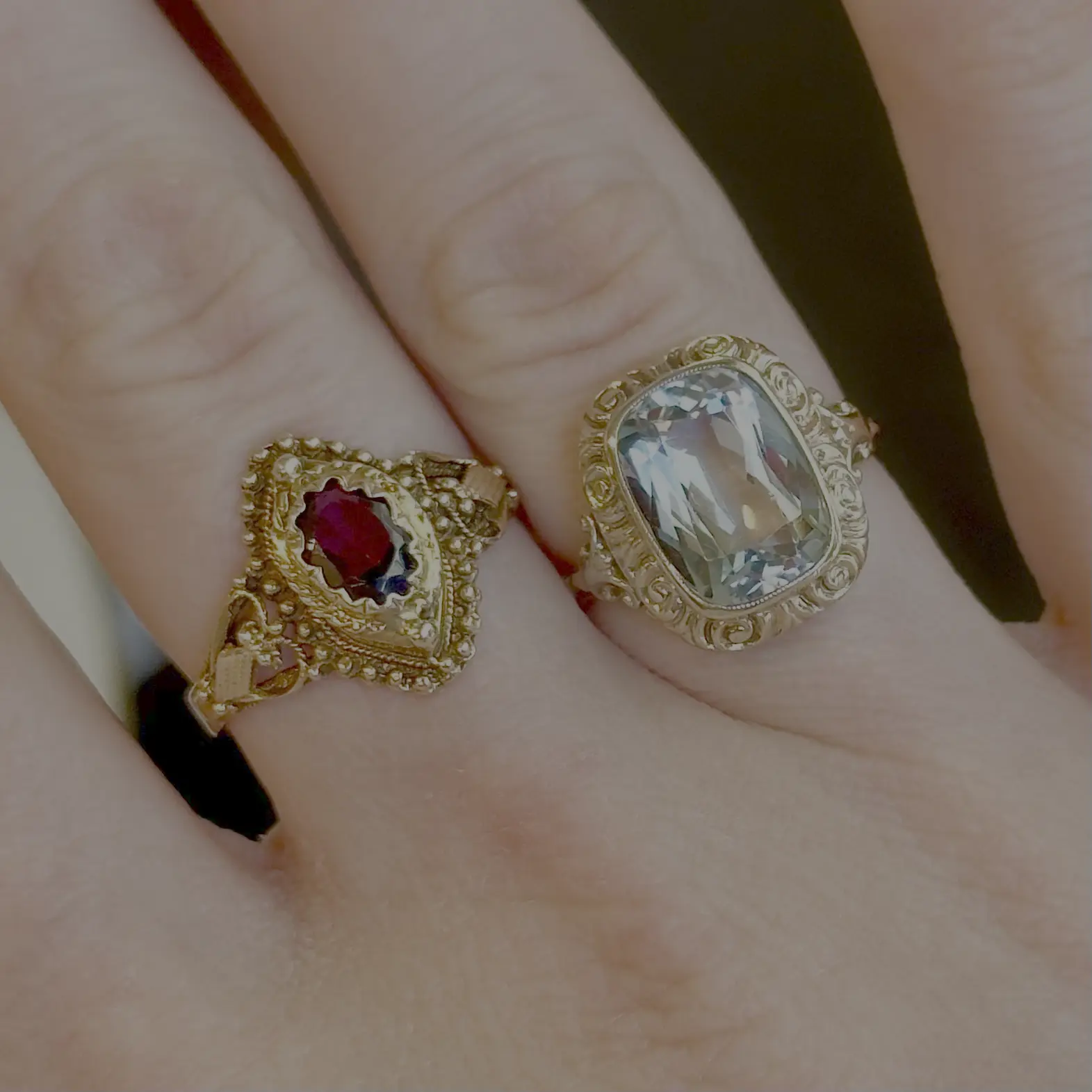
In April of 2024, I bought a ring that I knew almost nothing about. At the time, I only had a couple of pieces of modern fine jewelry of my own, but my interest in jewelry was growing quickly. My time working at Fox’s Gem Shop was sadly coming to an end as the business closed, and I had just started working for one of Seattle’s antique jewelry businesses. I knew I wanted a piece of antique jewelry that was mine.
Although we were allowed to wear jewelry from the store, I wanted something of my own to wear to work. I wanted to show customers that my interest in antique jewelry wasn’t simply professional. I genuinely loved it and wanted to learn more about it. So I started looking for a ring in my size that I could wear right away.
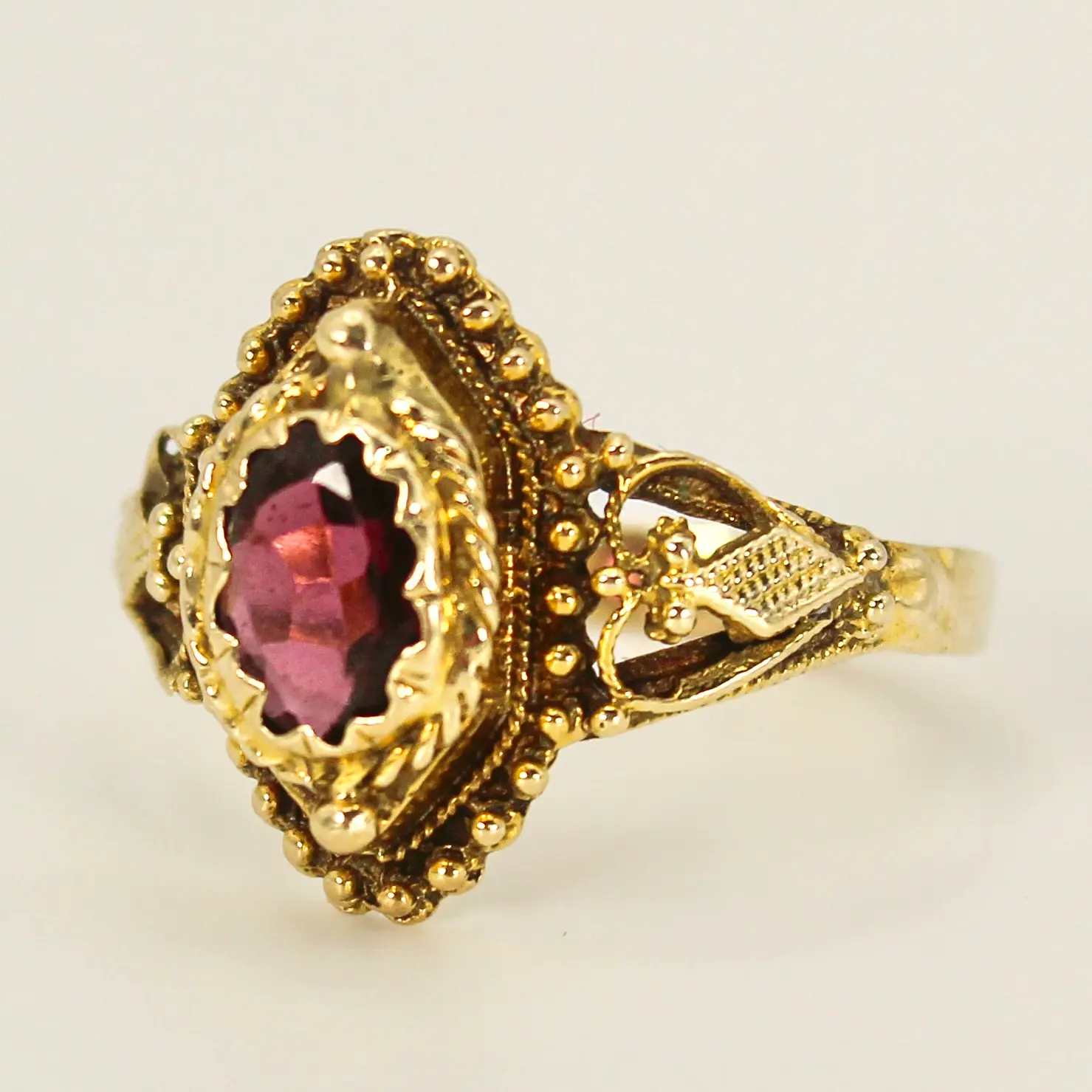
That’s how I found this one online. The seller didn’t know much about it either, and it was simply listed as a vintage 14K gold garnet ring, size 7. I didn’t know its style, construction methods, age, or historical influences. I just knew that I liked it. Something about the unusual shape, deep red garnet, warm gold, and intricate details drew me in, and that was enough for me to buy it.
Learning to Look
The more I learned about antique jewelry, the more I began to see in this ring. I started recognizing clues that pointed toward the Victorian era and, more specifically, the Victorian fascination with the ancient world.
The tiny gold spheres surrounding the design are examples of granulation, while the twisted gold rope details are characteristic of cannetille work. Both techniques were important to nineteenth-century archaeological revival jewelry, which looked to ancient cultures for inspiration. The pushed-down bezel surrounding the garnet adds another distinctly antique element.
The connection to the ancient world became even more fascinating when I learned about the Etruscans, an ancient civilization centered in what is now central Italy. Etruscan goldsmiths were renowned for exceptionally intricate work, including granulation and filigree. Granulation itself is an ancient technique, but Etruscan goldsmiths became particularly celebrated for their extraordinarily fine use of it.
Centuries later, archaeological discoveries in Italy helped fuel a nineteenth-century fascination with ancient jewelry. Jewelers began studying excavated objects and reviving ancient techniques and motifs. The Roman firm Castellani, founded in 1814, became one of the most influential names in this movement, creating jewelry inspired by Etruscan, Greek, Roman, Byzantine, and medieval traditions. Archaeological revival jewelry became especially popular in Europe during the second half of the nineteenth century.
Suddenly, my ring wasn’t simply an ornate Victorian piece. It was part of a much longer conversation between the past and the present.
The Beauty of the Hand
The more I learned, the more I appreciated the evidence of the person who made it. Almost every part of this ring appears to have been hand fabricated. The granulation isn’t perfectly uniform, the design isn’t completely symmetrical, and there are little melted spots and construction marks throughout the gold.
When I first bought it, I didn’t know what those details meant. Now, they’re some of my favorite things about it.
Those imperfections are evidence of its making. They tell us that a person sat down and worked this gold by hand, shaping the components, twisting the wire, and assembling them into the finished ring. The slight variations are a record of the craftsperson’s hand. To me, they make the ring feel more alive.
Seeing the Ancient Influence
This has also become the piece of jewelry I receive the most compliments on. Since buying it, I’ve had the opportunity to see more and more ancient jewelry, and occasionally I’ll come across something that makes me look at my ring differently all over again.
One example is a pair of ancient earrings I came across recently. They are not identical to my ring, but the similarities are striking: dark garnet stones surrounded by elaborate goldwork, granulation, beaded details, and delicate wirework. Seeing these ancient forms alongside my much later ring makes the connection to antiquity feel remarkably tangible.
It reminded me that the Victorians weren’t the first people to create jewelry like this. They were looking backward, just as we still do today. They studied the civilizations that came before them, admired their craftsmanship, and found ways to reinterpret those ideas for their own time.
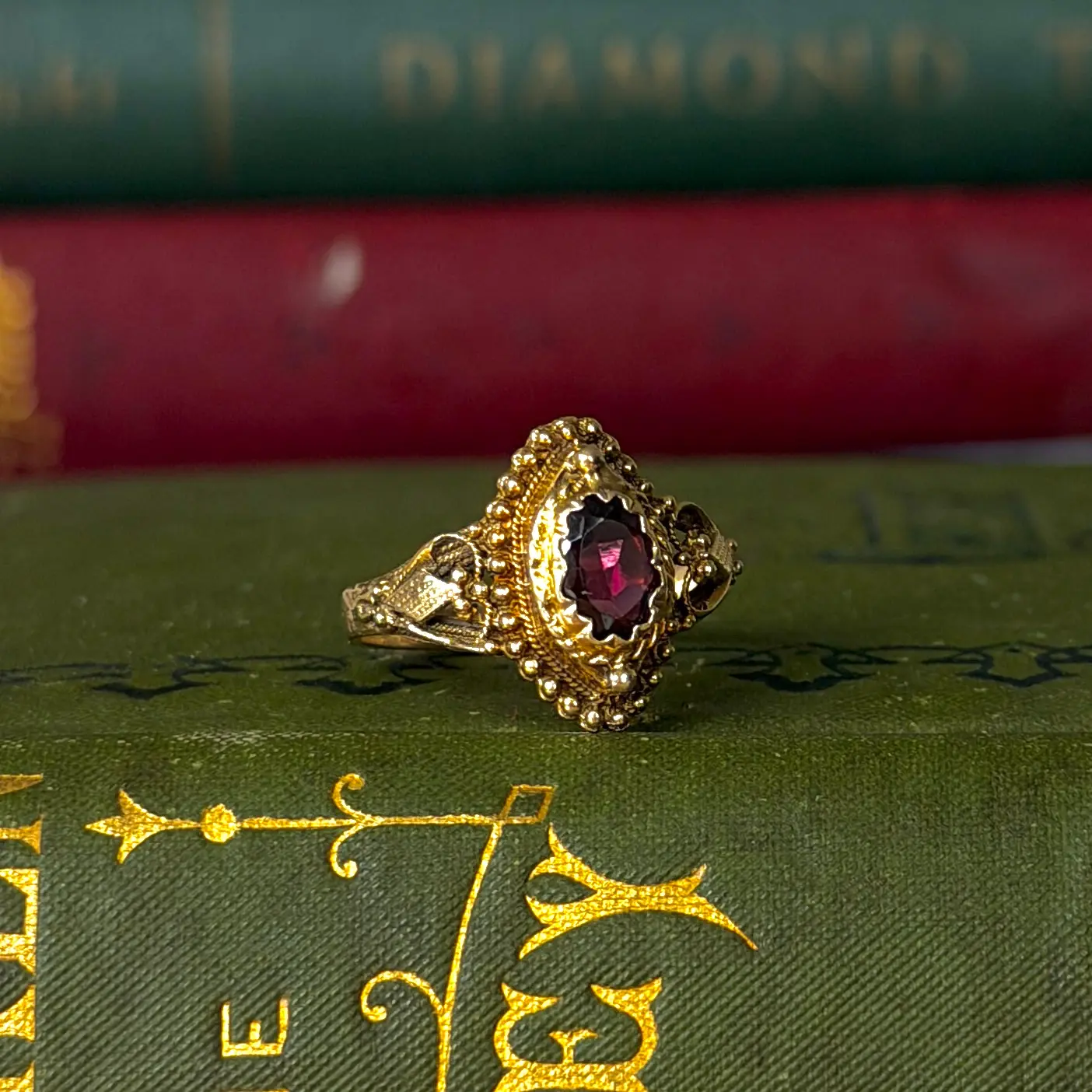
What initially seemed like an unusual Victorian ring became part of a much longer visual lineage, connecting a nineteenth-century jeweler to ancient goldsmiths who were working thousands of years earlier.
That realization has made me think differently about our relationship with the past. For virtually all of human history, we’ve been fascinated by what came before us. We excavate ancient civilizations, study their art, recreate their techniques, and find ways to bring those ideas into our own lives. We don’t simply preserve the past. We reinterpret it and carry it forward.
That’s exactly what happened with this ring. Ancient jewelry inspired Victorian jewelers, who translated those techniques and designs into something belonging to their own era. More than a century later, I found one of those interpretations online and brought it into my own life. Without realizing it, I became another link in that chain.
The Beginning of My Heirloom Story
When I bought this ring in 2024, I had no idea how important it would become to me. I didn’t know enough to identify its influences or appreciate the work that went into making it. I simply knew that I loved it. The knowledge came later.
That experience is a big part of why Heirloom Abbey exists. You don’t have to be an expert to fall in love with antique jewelry. You don’t need to understand every hallmark, gemstone, or construction technique before a piece can mean something to you. Sometimes the fascination comes first, and the understanding follows.
I bought this ring because I loved it before I understood it. And perhaps that is what makes it such a fitting place to begin my own story with antique jewelry: it taught me that an heirloom isn’t simply something old. It’s something that continues to be discovered, understood, loved, and carried forward.

From England to Idaho: Lost Treasures in Gold
During a recent trip back to my small hometown in Idaho, I wandered into a weathered resale shop hoping to uncover a forgotten treasure. The jewelry in the cases was underwhelming: modern pieces, broken chains, and tarnished odds and ends. Before leaving, I asked the shopkeeper if he had any other gold jewelry tucked away. He admitted that he never kept his better pieces on display. Too many people came through his doors looking to exchange yesterday’s possessions for today’s problems, so the finer pieces remained hidden.
He first handed me a bag of 10-karat gold, then 14-karat. Nothing caught my eye. Finally, he said, “Well, I do have two 22-karat gold wedding bands. I’ve always assumed they were from the Middle East. They tend to favor the high-karat gold.” I wasn’t convinced they would be what I was looking for, but he reached into the bottom drawer of his desk and pulled out an unmarked manila envelope. Inside were two beautifully worn gold wedding bands. Their softened edges and rounded contours spoke of decades spent on someone’s hand, with every scratch and mark reflecting years of wear.
A Hallmark Hidden Beneath the Grime
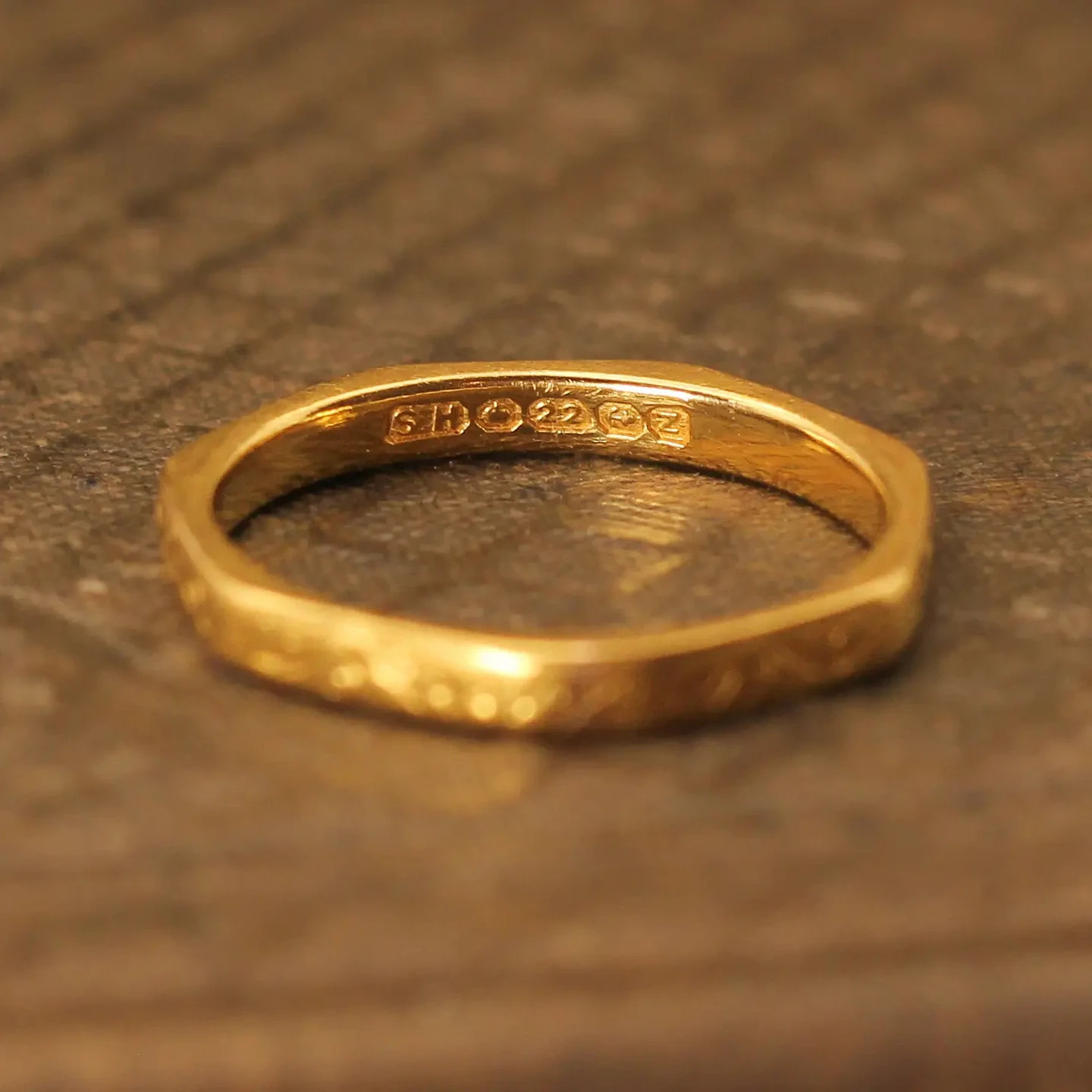
I hadn’t packed my loupe, but beneath the grime I could just make out faint impressions inside the rings. Among them was a tiny anchor, the unmistakable hallmark of the Birmingham Assay Office in England. For centuries, assay offices have tested and certified the purity of precious metals, stamping pieces with hallmarks that can reveal their metal content, place of assay, year of certification, and sometimes the maker.
After identifying and cross-referencing the hallmarks, we confirmed that both rings were assayed in Birmingham and made from the same 22-karat gold. The floral orange blossom wedding band dates to 1959, while the engraved seven-sided band was hallmarked exactly ten years earlier, in 1949.
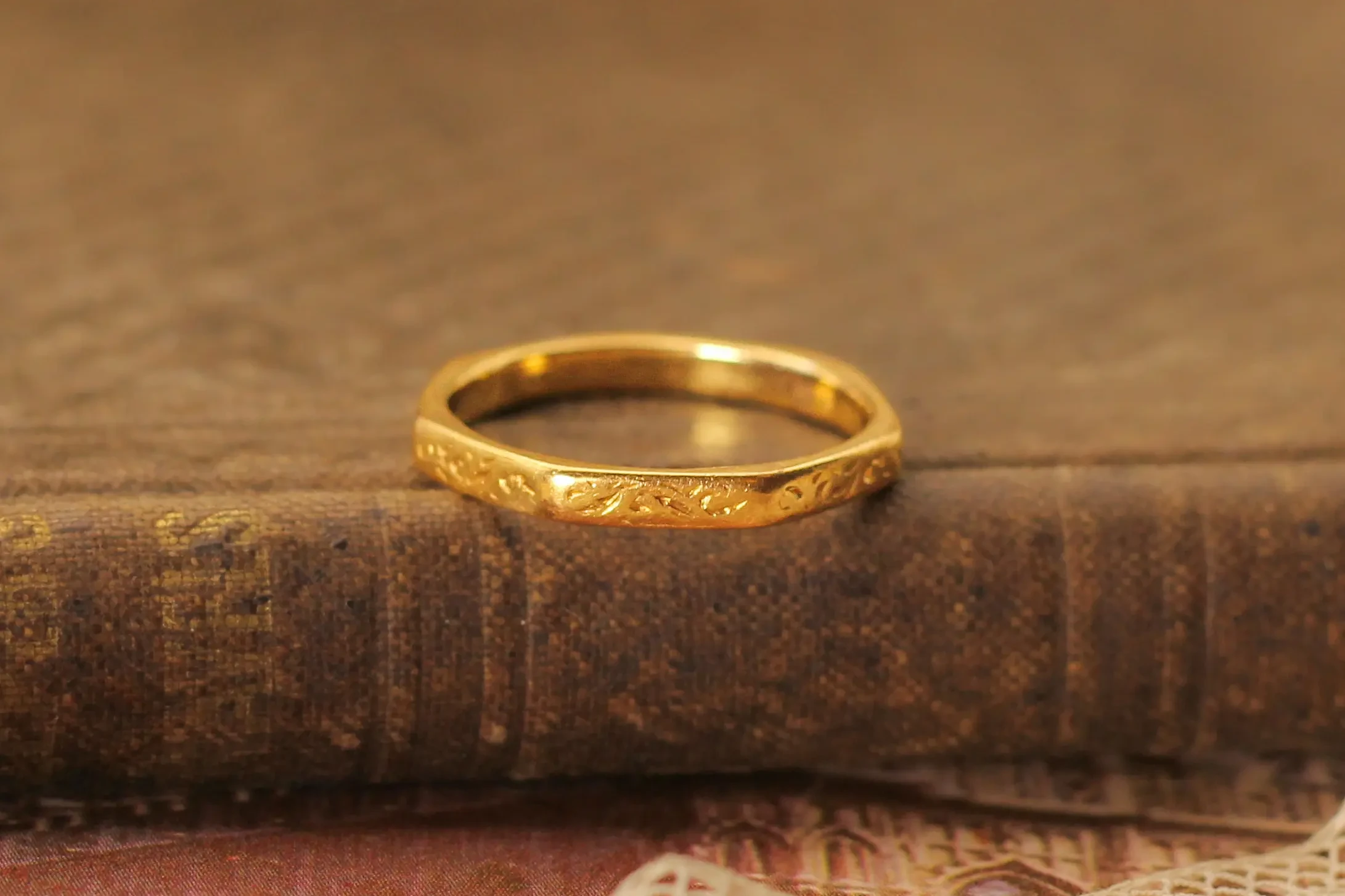

Ten Years Apart
The more we looked at the two rings, the more remarkable their similarities became. They are the exact same size, both are 22-karat gold, and both bear Birmingham assay marks. Most strikingly, their date marks are exactly ten years apart.
Of course, we can never know for certain how these rings came to be together. But the coincidence raises an intriguing possibility: perhaps the seven-sided band was the original wedding ring, purchased in 1949, and the orange blossom band was added ten years later to mark a tenth wedding anniversary. The matching size and metal make it easy to imagine the two rings being worn together, with the second band added to commemorate a decade of marriage.
It is only a theory, but that’s what makes the discovery so compelling. A pair of rings that might otherwise seem like two unrelated pieces suddenly begins to suggest a story: a marriage, ten years of shared life, and a new ring added to the original as that life continued.
A Journey We Can't Trace
The rings began their journey in Birmingham, England, and decades later surfaced together in an unmarked envelope at the bottom of a desk drawer in a small Idaho town. Everything in between is a mystery. They may have crossed oceans in a suitcase, accompanied newlyweds starting a life abroad, or passed through generations before eventually being tucked away and forgotten.
The hallmarks tell us where these rings began, but not where they traveled or who wore them. They don’t reveal the hands that wore them smooth, the marriage they represented, or the occasion that may have brought the second ring into the story.
That mystery is one of the things we love most about vintage and antique jewelry. These pieces connect us to people and places we may never know, turning something as simple as a gold band into a tangible witness to history.
These rings survived because someone chose to preserve them rather than melt them down for their gold. They were worn, saved, rediscovered, and eventually passed forward. Pieces like these are exactly what we love to steward at Heirloom Abbey. Fine jewelry can outlive us by generations when properly cared for, making us less its owners than temporary custodians.
From England to Idaho, these two rings remind us that the most fascinating part of an heirloom isn’t always what we can prove. Sometimes, it’s the story the evidence allows us to imagine—and the possibility that, after all these years, these rings may still be telling it together.