The story of a Victorian signet ring
A Story Still Attached
One of the questions we get asked most is where our jewelry comes from. Usually, we can trace a piece to a certain era or maker through its hallmarks and craftsmanship, but the people who wore it are often lost to time. Every once in a while, though, a piece comes to us with its story still attached. This Victorian signet ring is one of those rare finds.
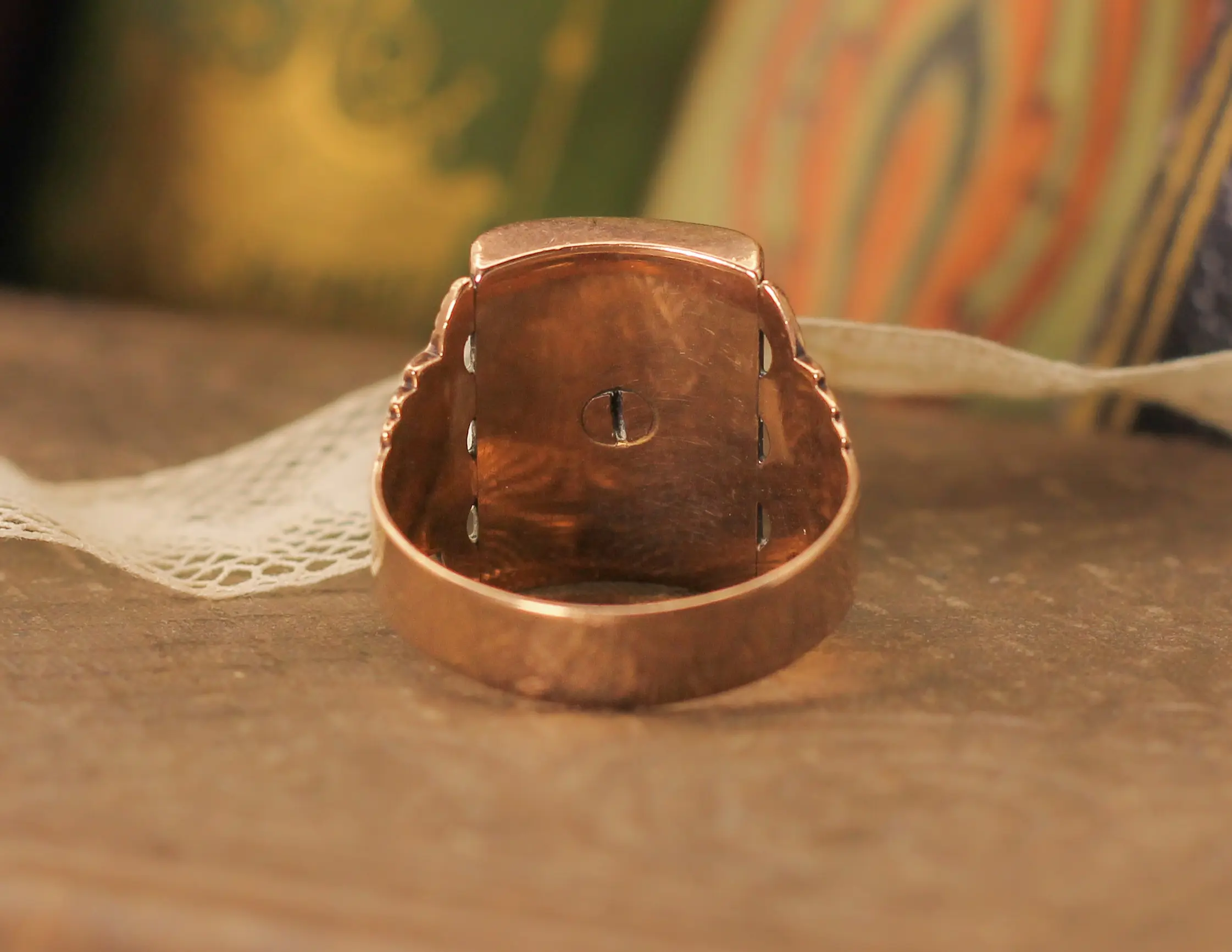
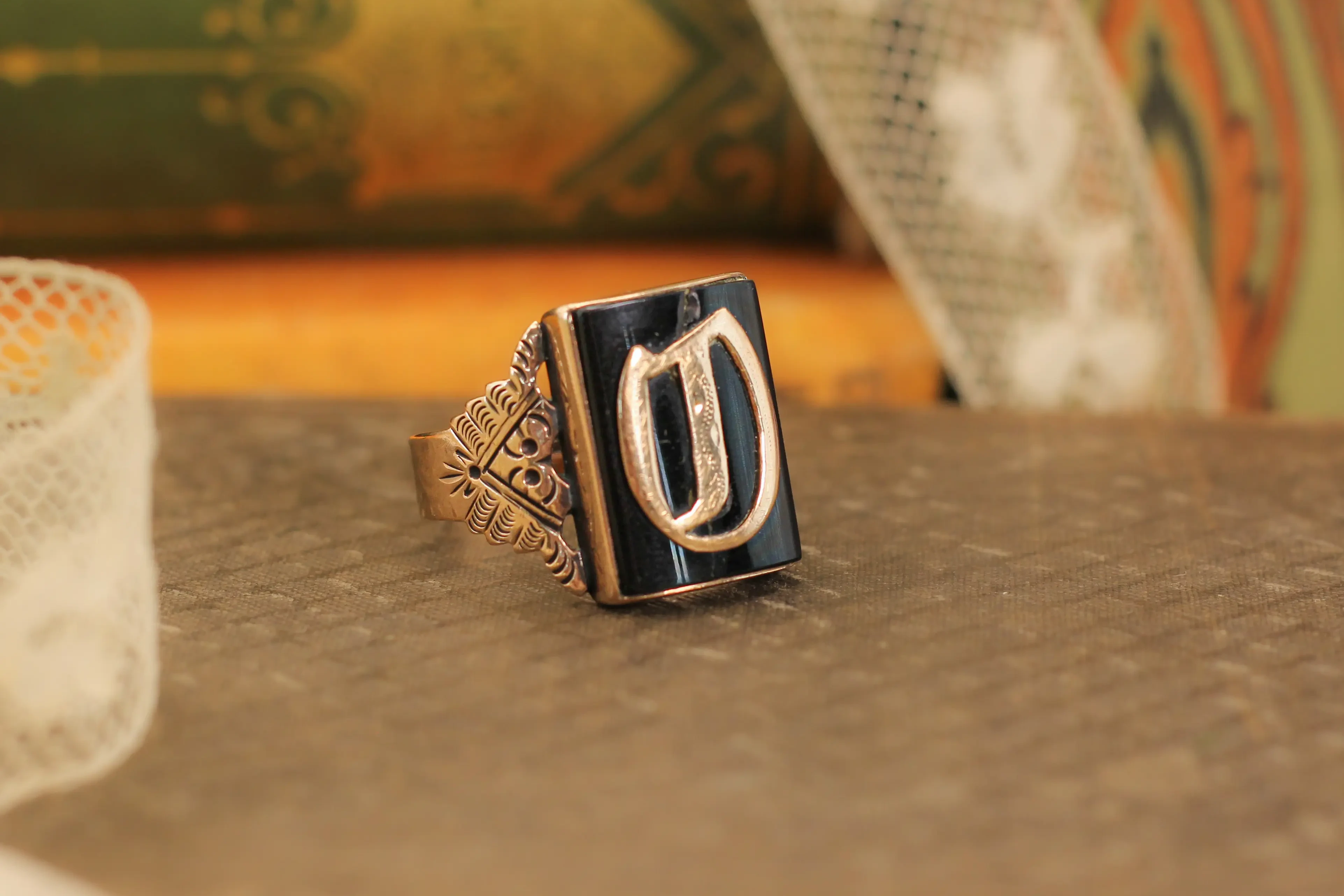
Set with a black onyx tablet encrusted with a golden Old English “O,” the ring is stamped inside with Patent Aug. 26, 1890. When we found it, we connected with the owner and asked if they knew anything about its history. They told us it had belonged to their great-grandfather, Charles “Charlie” Overpack, born in North Hampton, Ohio, in 1871.
The Man Behind the Ring
Charlie and his wife, Cora, owned a grocery store and meat market for decades. When their business burned down in 1930, they rebuilt and kept the community going. His family remembered him as someone who dressed well, appreciated good craftsmanship, and loved finding new uses for old materials.
From then on, I saw it differently. It wasn’t simply an antique ring; it was Charlie’s ring.
An Invention in Gold
The patent date opened another chapter of its story. It led us to William Leidig of Newark, New Jersey, who patented an interchangeable jewelry system in 1890. His design allowed the face of a signet ring to be removed and replaced without changing the gold mounting.
When we compared the patent drawings to this ring, every detail matched, confirming that it is an original example of Leidig’s invention.

Carrying the Story Forward
Finding a piece with both documented family history and a patented design is incredibly uncommon. At Heirloom Abbey, those are the stories we love most. Jewelry can last for generations, but when it carries the people and history behind it, it becomes much more than something beautiful to wear. It becomes a piece of the past that can continue its story with someone new.